I Am...

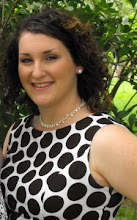
My name is Jessica Danielle Miller, and I am a 20 year-old Special Education major. I grew up on a large farm in rural Chatom, Alabama, and I have wanted to teach my whole life. It was only recently, though, that I realized my calling was Elementary Special Education. My little sister, Laura, had a lot to do with that decision. I am a junior at the University of South Alabama, and I have a little more than two years left in school. I am more than excited about my career and what it will mean for me when I do graduate, but no longer does school seem like a horrible waste of time. I feel like I am working towards a greater good in my life and in others.
As a Special Education teacher, lots of opportunities wouldn't be open to me in my classroom, but their are many things I would like to implement in my classroom to help my students with special needs to succeed. The success of every student should be the goal of all teachers, and it is something I will work diligently toward.

Tuesday, July 7, 2009

Modeling

Modeling proper educational techniques is vitally important for students with special needs. When a student is struggling with a certain skill it is helpful to "model" the skill and its application properly.
Certainly I as a teacher could model the proper techniques for certain skills like reading or math, but it would be an exciting change to sometimes invite in guests to read stories to the children and then use it as a lesson in the way reading sounds when it's done correctly.
Reading is an easy skill to use modeling with, but it can also be used as a tool to teach children proper interpersonal skills. Another teacher and I (or two guests) could act out a skit to illustrate the correct way to act in certain situations. Also, modeling would be successful in showing students how to work out a math problem in their head. By going through the problem step by step on the board, I could illustrate to the students how to better do it own their own.

Fluency Logs

A problem many children with special needs have is learning to read. Fluency logs are a way to help each student attain their individual reading goal. The logs are reading passages based on reading level kept in binders, and each child has their own binder. Every day each child would read through a story while I timed them and counted reading errors. Once they mastered one story or level, they could move on to the next.
This is one place where peer helpers would come in extremely handy. Sometimes the children could swap out and read the stories to each other, leaving me free to attend to other tasks. The children could then help each other with the fluency errors they were having.

Teacher Involvement

From the teacher standpoint, it's easy to harp about how the parents need to become more involved in the education of their children. However, it is my personal opinion the teachers also need to become more involved in the education of the children trusted to their care. It's hard for teachers to truly make a difference if they aren't willing to take a personal interest in their students. We've all had those teachers that only did the bare minimum, and never seemed to care whether we succeeded or not. They assigned work to be completed and sat down at the desk. We were all scared of those teachers, they were so unapproachable. I've come to realize that they were probably in it for the wrong reasons, and a student's personal victory was of no concern to them.
I do not intend to ever be one of those teachers! I want to take an interest in the success of each of my students, and spend individual time with them so that they can better achieve their goals. I want all students to feel like they can approach me with a problem, not just my own. When children don't feel comfortable talking to their teachers, something is wrong, and it needs to be addressed. I don't intend to get frustrated with my struggling students and do the work for them. That is just fostering helplessness, and that isn't doing anybody any good, least of all the children. When a child is struggling, it's time to find a way to help them succeed. I want to be able to help all of my children have their little personal victories that I celebrate right along with them. That's the kind of teacher I want to be!

Peer Helpers

The concept of peer helpers is not a new one, but it is a concept that I plan to implement in my classroom. There are many benefits students with special needs can gain from helping each other on certain assignments.
Students with special needs often also have problems developing social skills. By forcing students to get in groups and work together in a structured environment on certain assignments or projects, they are not only gleaning knowledge from one another. The students are gaining personal skills that can follow them for the rest of their days. When forced to work together, children learn to cooperate, respect their peers, take turns, and to value the opinions of others. They could also make a friend in the process, which is something children with special needs also struggle with long term. It may seem like a waste of time in a regular education classroom sometimes for students to work together, but in a Special Education classroom the benefits of peer helpers is too great to ignore.
The groups can, of course, also help the students in problem areas if groups are organized so that for example a strong student in reading could work with someone who was weaker in reading. Then the weak reader could return the favor when it came to social studies (where he is a better student).

Parental Involvement

Better parental involvement is vital in all aspects of education but as a Special Education teacher, I believe that it would be imperative to institute ways to better involve the parents in the education of their special needs children. It is important in any school setting for parents to take an active role in their child's education, but when we are considering children with special needs the stakes are higher. It becomes of much greater importance that parents take an interest in the education of their children, and as a Special Education teacher it would be my job to get the parents involved.
As a teacher I will implement blogs in my classroom for the express purpose of keeping the parents of my students informed and involved in their education. The blog will have posts on the progress we are making, and the things we have covered in class. The class blog will also have homework listed so parents will no longer be able to say that their child didn't bring home the homework sheet, or they weren't informed of the homework due. These are all very probably excuses especially when dealing with children with special needs, however putting the homework on a blog that the parents could view daily would alleviate any confusion on the matter.
I realize that many parents won't have access to a computer of their own, much less should they be expected to understand how a blog works. I avoid this problem, (this would occur often in my hometown) I would hold a meeting at the local public library teaching them how to use the free computers and access our class blog. I would be open to any questions or concerns the parents had at this time, and explain my reasons for creating such a site in the first place. I think parents would be interested to know what was going on in their child's education, especially when I posted artwork created by the children, and pictures of them during various school activities. Although it's important for parents to become more involved in the education of their children, it is also important for them to know that they enjoy themselves too.
Last but not least, if it was not possible to reach a parent or two through the class blog, or it seemed that they just refused to check it, I would send out a class newsletter with the same information contained in the class blog.